Tuesday, February 1, 2011

Smithsonite - It hasn't ever heard of you either.

Sadly, not all minerals are interesting.


No, the truth is that the vast majority of minerals border on being rather dull. And the majority of those are guilty of being downright boring. Have you ever heard of anglesite? No? Well, how about smithsonite? No again? Well, there's a reason for that. It's because they're boring. And it would be blog suicide to mention them with these hallowed halls of earthy knowledge.

With that in mind, let's discuss smithsonite.


Contrary to my initial paragraph, I really like smithsonite. But I kinda like all minerals, so my opinion isn't worth the electronic paper it's typed on. But most people find most minerals to be mostly boring. I think this has to do with the fact that it is impossible to take the usual qualities that endear us to an object and apply them to a mineral. You can call a golden retriever loyal, playful and dedicated, and people will think you are a fine pet owner, but if you try to describe a piece of pyrite as being loyal, people are going to try to distance themselves from you. They may even do that if you bring up pyrite in the first place.

SCOTT'S TRUTH OF THE DAY

Do not attempt to bring up minerals in a casual conversation unless you have been receiving signals that indicate that the opposing party is interesting in hearing about the subject. Even then, proceed with great caution. Failure to follow this simple guideline can lead to headaches, disinterest, and frequent Saturday nights spent painting small pewter figurines by yourself in the basement.

END DAILY TRUTH

To be completely honest, I think smithsonite is actually one of the more interesting minerals. Here's some pictures of it with some of various unusual things that occupy my room. If you are going to be the kind of guy or gal who decorates with rocks, then it's important to completely give up on a fully functional social life early on. Once you do that, you can post pictures of the weird stuff you've collected over the years on the internet without worrying about how it may be crippling other people's opinions of how you spend your free time.


Smithsonite also looks good next to NBA bobble heard figures.


Aaaaaan here it is on top of some Morton's Salt


You'll note that all the pieces of smithsonite I own happen to be light green in color, which is fairly common. But it can come in any color you want. The hip version comes in pink.


Whereas the republican version comes in blue.


Isn't that one cool? So blue! It's from a place called the Kelly Mine in New Mexico. It costs a ton to get stuff from there, so I had to...borrow....that picture. Anyway, those are the most common colors. There's a version that is yellow that people have named Turkey Fat ore, due to it looking strikingly similar to a glob of melted turkey fat. There's a legend that to be accepted as being a tough miner you had to eat a pile of pancakes grilled up in yellow smithsonite. I just made that up.

Sometimes other minerals show up with smithsonite. In fact, most of the time other minerals show up with smithsonite. You don't care, but here's some pictures anyway.


The little green spots on both of those pieces is roasaite. It's a zinc-copper mineral with a bunch of other stuff in it. Maybe I'll talk about rosasite later, I don't know. Leave me alone.

But as long as we are talking about zinc (which I'm not sure we were, but for the sake of moving along let's just say that we were), let's talk about what we can find within smithsonite. Remember how both pyrite AND galena had sulfur in them? Well, forget about that! There's no sulfur in smithsonite! See you in hell, sulfur!

So, the only logical thing to do now is make some smithsonite. The first thing you will need to do is track down your local zinc dealer. Order up two or three sacks worth.


I only threw that picture in there to break up all this text. Plus, who knows, maybe that guy is a zinc dealer. Probably not though.

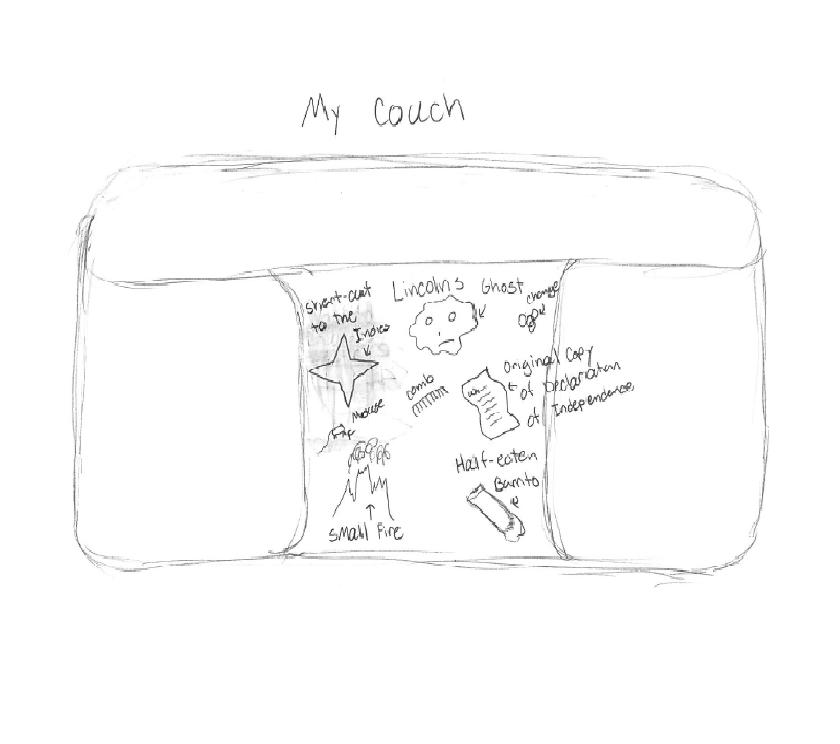
Next we are going to need some CO3. Go find some of that. Did you check under your couch cushion? Sometimes CO3 likes to hang out there. Once I found a half-eaten burrito and some other stuff in a couch I bought at a discount store.


Anyway, if you are able to track down those two ingredients, mix them together for a couple million years and Bam! There you go. ZnCO3. That means that smithsonite is approximately 64.8% ZnO and 35.2% CO2. Not bad at all. The fact that it as CO2 in it instead of sulfur means that smithsonite is a carbonate mineral. There are other carbonate minerals. If you are so into this that you can't wait for me to cover them in blog posts, then you can always go to your local library and look them up. Nerd.


Hey, just to mix things up, want to see what smithsonite looks like when it still resides in a mine? I know I do! That probably means you do too! Well, here we go!


That's a picture from the Hidden Treasure Mine. That was one of the scariest places I've ever been. I hope you appreciate that picture.

Well, let's look at the other aspects of smithsonite. It runs in the middle of the pack with regards to hardness, clocking in at a steady 4 to 4.5 on the Moh's hardness scale (as opposed to rating a 9 on the Oh! scale). I forget what exactly that means. I think it means that a penny can't scratch it, but a steel knife will dominate it. Something like that. In addition, it has a vitreous luster. So, that's pretty good to know. Don't confuse that weird, bubbly look that it has with the vitreous luster. That's a whole different characteristic, namely it's called being botryoidal. That's cool word. You should use it more in daily life.

A final thing you will notice about smithsonite is that it is pretty heavy. But what would you expect from a mineral with a specific gravity of 4.30? I don't know what that means either. There's a lot about minerals I don't know.

Probably the greatest thing about smithsonite is that it fizzes. You read that right, it fizzes. In fact, if you had enough acid, you could make it fizz until it was completely gone. So let's all run down to our local acid dealer!


That guy deals in quite a few things it would seem.

Now, let's watch this little educational video I've put together! I'm pretty sure it will really make us think.....


And for the end credits!


That credit is wrong. The main character used to be named "Timmy" before I realized that "Cornelius" is a funnier name. Good marketing is very important when you are in the business of making movies about chemical reactions.


You see, the HCl acid makes the CO3 in our mineral go all nuts! What's great is that ALL carbonate minerals will do that! In fact, in the interest of full disclosure I have to admit that the rock used in that movie was not smithsonite at all. It was, in fact, calcite, which has the chemical formula of CaCO3. I worked too hard to those pieces of smithsonite to go all acid crazy on them. In theory the reaction would be the same though. I don't have to defend myself to you.

So, if you really want to know WHY that happens, let's look at the following chemical formula that I found on someone else's website. Nothing get's blog viewership up like a chemical formula.

NERDY SCIENCE PART!!

When the ionic substance is in aqueous solution, and added to HCl, the products will be CO2 gas, a metal chloride (in this case zinc) and water.

Ionic Equ: 2H(1+) + CO3(2-) = CO2 +H2O

Now some of you may look at that and say "Of course! The metal coming from the original ionic substance"! Those people need to look at themselves and feel shame. Anyway, what's say we watch another movie I made. This one features me yelling at some seals!


Moving along, lets look into how smithsonite got its name. The answer may surprise you. Or, like everything else we've seen in geology, the answer will probably seem pretty unoriginal. It was named after a guy named James Smithson. This guy, in fact.


Look at him! Hey, fella, save some forehead for the rest of us! Anyway, this is the very same James Smithson who founded the Smithsonian Institute. He first discovered our little blue/pink/green friend in 1802, but it is considered tacky to name minerals after yourself. So he had to wait until 1832 until some french guy named Francois Sulpice Beudant finally did it for him. He might as well called it Hugeforeheadite.

So what can we use smithsonite for? That's a fair question, and I'm a fair man. As such, let me impart all sorts of valuable knowledge to you. The answer is that it really isn't good for a whole lot. Some people like to make jewelry out of it, and it seems like it worked out for them pretty well for them. Look at this stuff!


In addition to being used for adorning our women, smithsonite can be used as an ore of zinc. People use zinc for all sorts of things. I know that those vitamins that old people are supposed to take that have zinc in them. Centrum Silver I believe they're called. I watched an infomercial on Centrum Silver once that told me that old people aren't getting nearly enough zinc. If it's good enough to be on an infomercial at 2 in the morning, it's good enough to be on my blog.

Look at how long this post is! So much valuable information! Let's take a break while I use the bathroom. I'm putting this bear in charge while I'm gone.


One final question that must be plaguing your little minds is the matter of how smithsonite forms. Well, that's a good question. The answer is a fancy word. Namely, that word is Supergene Processes, which is really two words I guess. You drop the term "Supergene Processes" at a party and you will be the hit of the season. You don't even need to know what it means to sound super cool, which is good because I'm in no mood to explain it.

Alright, I'll explain it. But just so you don't go blaming me when you are at one of those swanky geology parties that I never get invited to and use the term "Supergene Process" wrong.


And when I say that I'm going to describe it to you, what I mean is that I'm going to tell you to go google it.

And so the sun sets on another mineral. I think we've all learned a lot here. I know I have. I learned that sometimes blogspot fails when you are trying to post and then all the stuff you've made up about some mineral is lost forever. Hey, I have an idea! Let's go read it again! Remember how much fun it was the first time? Maybe there's something we missed! Let's go see!

Thursday, January 27, 2011

Mines of Central Utah and You, Part I

Well, it looks like someone else started to follow this blog while I was away. That means we are up to 24 people in total who follow this blog, only half of which are family members. Not bad. I'm guessing that means that some folks find some value in these oft ill-researched and poorly spelled posts. Either that or you are my enemy, and are searching these posts in hope that they will in some way reveal a weakness that you could exploit in order to destroy me. That seems the more likely scenario.

And where have I been? A journey of personal improvement? Far off lands filled with exotic treasures? A community college typing class? All possibilities. But my personal achievements and sizable collection of personal failures take a backseat to the mines of central Utah. That's what so great about life. No matter how many engineering exams you fail, you can always sit back and realize that they pale in importance compared to filthy holes dug in the middle of a sparsely-populated state by poorly-washed people who are now long dead and forgotten.

And so, with that introduction, let's look at some mines. Today's adventures take us all the way to Beaver (grow up) County Utah. You remember the ghost town of Frisco? What a post that was! Filled with inaccurate data and poorly shot photos, it really opened our eyes to my version of history. Well, these mines are kinda close to that place. But not really. They are here-ish.


There's not a whole lot out there. There's a town named Milford nearby, but it has always made me feel sad. Like a little puppy that was promised this great future, but then all the mines went out of business and now most of the puppy is empty and deserted. It's like a deserted puppy. I've never actually stopped to take a picture of Milford, so you are just going to have to imagine it. A quick Google search revealed this little factoid...


So, I guess to be accurate, it's a deserted puppy covered in white people. The surrounding landscape hasn't fared much better.


Look at that! So much open land! One day that will make a fine parking lot, or perhaps even a contaminated soil storage facility! Options abound. But this post isn't about Milford (which I actually like) or contaminated soil facilities (to which I am indifferent), it is about mines. There's a reason I've virtually dragged you all the way out here. The hills around Milford are pot-marked with mines! And while there are many mines (and therefore many mine districts) around Milford, I've decided to just focus on one district for now. No need to overdue it on your first Milford experience. You're young, and I've seen strong men piddle themselves at the mere concept of a mining district. Anyway, let's take a look at the Bradshaw Mining District.


The Bradshaw Mining District is one of the older districts in Utah. Older than most people. Well, I guess all people at this point. People born in 1875 are probably dead by now. Anyway, during the 1870's a lot of people loved Beaver County. Mining districts were all the rage, and all the cool kids had mining districts. They were the iphones of the coal era (until 1895, when they were unseated on the coolness scale by the early steam-powered iphones). The Bradshaw district is located on the southwestern slope of the beautiful Mineral Mountains.


For some reason this lady showed up when I googled Mineral Mountains. For some reason I feel compelled to include her.


I'm guessing that the Mineral Mountains were named after minerals were found there, but I don't know that for sure. And I'm not in the mood to research it at all, so yeah.


The Bradshaw District was named after a young gentleman named John Bradshaw. Mr. Bradshaw had a dream. A dream to be very very rich. A lot of people had this dream in fact, so Mr. Bradshaw was hardly alone. The problem was that Mr. Bradshaw was a pretty cruddy prospector, and had to give up on the mining game and become a shop-keep. Then one night in 1859, Mr. Bradshaw had a dream in the more literal sense.

In this dream, he saw a small cave located on the side of a mountain. Looking in, he found a rats nest filled with gold nuggets! This is far better than the usual things a person finds in a rats nest! The next morning John ran off to the nearby mountains and after a long day of searching he found the very cave in his dream. Looking in, he found a rats nest filled with gold nuggets! Real ones! Not the dream kind that so many of us have found! Further inside the cave he found stalactites covered with silver and gold! Remember, while messing around in rats nests worked out for John Bradshaw, it is probably still a good idea to avoid the temptation. Gold nuggets are probably not as common in a rats nest as the plague. Which is the opposite of gold. Anyway, this was the beginnings of the Cave Mine, of which we will hear more about later.

In honor of Mr. Bradshaw, the inevitable rush of prospectors created a little town at the mouth of the mine named Bradshaw City, as well as naming a spring after him. For all I know this could be Bradshaw Springs...


And none of you can prove to me that ISN'T Bradshaw Springs because I took such a horrible pictures, so I win.

Despite the account given above, most of the mines in this district featured veins on the order of 2 to 6 feet thick that contained our old friend Galena, which we've already covered in a well thought-out and colorfully illustrated post a few months back. In addition to ol' Gal, (which is what I'm calling Galena now), they found some copper and gold and other stuff like that. Prospectors love all those things.


Which isn't to say that if they wouldn't mind mining prostitutes if the opportunity presented itself. I just noticed that Mr. Prospector there is holding a piece. Huh. Sometimes prospectors would get in fights and kill each other. It's time I'm stopped shielding you from the ugly parts of the prospectors world. It wasn't all not-bathing and STD's. There were some bad aspects of being a prospector too.

So here we are, sitting in the middle of 1870 with a pick in our hands and the majestic hills of Beaver County at our backs. Where do we go? Well, we have a couple of options. The Cave Mine is the biggest producer, so we could probably go poke around there for a little while. Or we could go to the Summit Mine. I don't know where this mine is, but I'm guessing we would have to climb up to it, and I'm not willing to do that. Other options are the Houdoo, Cyprus, Sherman, or Triangle mines. I bet the Houdoo mine is haunted. Let's not go there.

To be honest, the only mine on that list I could find is the Cave Mine. And the only reason I could find it was because it's up on a hill with a bunch of rocks piled all over the place. It's like a chubby kid trying to hide behind a two-by-four, or perhaps like a plump turkey attempting to avoid the farmers axe by hiding behind an NRA pamphlet. It really stands out is what I'm saying here. See?


Whenever you see a pile of rocks like that, chances are you are in an area that is mine-rich. But just because you've found a pile of rocks that CAME from a mine, it doesn't mean that you are any closer to finding the mine itself. For example, this is all that remains of the entrance to the Cave Mine.


A few more years and nature will have reclaimed her own, and the Cave Mine will be nothing but a crappy blog post. Not a bad run actually. As mentioned above, the Cave Mine was first discovered in 1859 which predates the formation of the Bradshaw District by nearly 20 years. That means that this mine has been open for over 150 years. I doubt that any of us will have an opening that looks this good in 150 years, so who are we to judge?

In it's day, the Cave Mine was the largest producer in the area. This little hole spat out ore that was 27% lead, and contained 408 oz. of silver per ton. A tidy little $16 worth of gold per ton was just icing on the cake. All in all, 15,000 tons of rocky goodness came out of this place, which makes it far more valuable to mankind than any of us. Sorry to be a downer. Its run as a producer was short however, and after a few years the natural cave that once housed a museum of amazing earthy artifacts was stripped of its beauty and abandoned.

So, let's get in there. It's cold out and the sweet breath of adventure is upon us! Once you wiggle in a good 15 feet, you start to think this was probably a bad idea. And you're right. It WAS a bad idea. But we've gone this far, and you couldn't turn around if you wanted to, so let's push on. Except for all the rocks gouging into your soft, pink flesh, it's like getting birthed again.

Soon enough, things open up.


Like you would expect, it's pretty dusty in there. Look! A railroad! Let it be our guide to adventure and likely-doom!


Keep following the tracks! It's like a game, except with more lung-destroying particles!


This part caved in. That may be why they called it the Cave Mine. Either way, um, that's not too great of a sign. Let's keep going. (The Cave Mine actually contained several natural caves, which lead to the name).


This is what it looks like if you stare up an ore chute. What's great is that there's still a chance that ore will come crashing down on you if you stand there long enough. Mines are like that sometimes.


See that stuff on the walls? That's Aurichalcite!


It's a blue mineral that's really purdy, but impossible to collect because it falls part all the time and makes you swear. I tried to collect it anyway. Here's a list of all the things you can find if you have a low enough value on your life to risk wiggling into the Cave Mine.

Acanthite
Anglesite
Aragonite
Aurichalcite
Cerussite
Chalcopyrite
Cuprite
Galena
Gold
Limonite
Magnetite
Malachite
Pyrite
Scheelite
Sphalerite
Sulphur

That's a pretty good list. I didn't see any gold, but to be fair I didn't really see much of anything. I think I may have accidentally made that some sort of link to mindat. Mindat is a webpage that is covered in minerals and stuff. Go read it if you want. But not until you are done here. I'm very insecure.

Understandably, I didn't really want to hang out all that long in this mine, and neither should you. So let's leave that place for now.

So there you go. A mine that is really far away and pretty collapsey. Seems like that was a pretty interesting post. I'm pretty great and stuff. In the interest of wrapping up all the lose ends, Mr. Bradshaw never got much money out of his mine. Once he told folks about his magical dream-turned-reality mine it pretty much was taken away from him. So, once again we learn that everyone else are jerks.

The End

Friday, September 17, 2010