Wednesday, March 23, 2011

Topaz. Is it better than our 17th President?

I don't know much about the presidency of Andrew Johnson. Widely regarded as one of the worst presidents in the history of the United States, his political career is tarnished by his being the first president to ever be impeached. With such a weighty political history, it may surprise you to find that I am the first person to ever compare this ill-regarded politician with a pyramidal silicate mineral containing aluminum and fluorine. And yet, here we are.

So with that in mind, let's look at the players involved here. In one corner we have Andrew Johnson...


And in the other corner is our decidedly less humanoid character, the mineral topaz...


You can't really tell from that photo, but that's a picture of topaz. Also of some sore throat spray. I have a cold.

So obviously there are a few physical differences between the two parties, the least of which being the complete lack of a nervous, digestive, circulatory and all other systems in one of the subjects. For ease, let's make a list of the physical highlights at play here.

ROUND ONE - Physical AppearanceAs you can see, the similarities are few and far between with regards to the physical appearance of topaz and our 17th president. The biggest discrepancy would have to be in the area of hardness. A topaz crystal comes in at 8, making it the hardest mineral we have looked at so far. The hardness scale breaks down a little once you get past 6, and basically it tells us that the only thing that can scratch something with a hardness of 8 is something with a hardness of 9, which isn't terribly useful. Ah well. You think you're so smart, you come up with your own list. One area where this DOES come in handy is when you are trying to figure out if you have found topaz or quartz, which tends to look a lot like topaz. Look at this madness and see if you can guess which is which!


It's the ultimate challenge! Has it driven you mad with confusion yet? Do you feel the walls of your reality breaking down???? Well, I'm not going to give you any hints. I'm not here to be helpful. Well, alright, maybe just one little hint.


There. Hope that helps. So the main point to remember is that because quartz has a hardness of 7, you can scratch it with topaz, but you can't go the other way. It's like some sort of cut-rate time machine. Except typically time machines emit sparks and whistles which make them way more interesting than either topaz or quartz. What are we talking about again?

Moving along, unlike humans, topaz sticks to a few basic shapes. The most common shapes (in Utah anyway) are crystals that look like little crayon tips. Something like this....
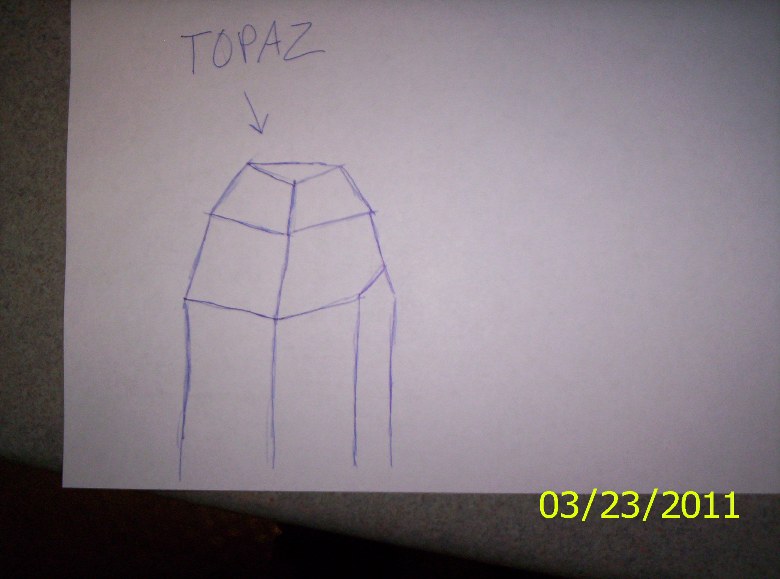


Alternatively, President Johnson looks like this (regardless of location)


Except a little grumpier. I couldn't quite capture the anger. Ah well. Like all of us, President Johnson was encased in a fleshy human body. Geologically speaking, the human body is an unfortunate invention. Soft, pudgy, occasionally reeking of onion, our fleshy suits don't even have the strength to outdo the weakest of minerals. But don't fear, my fellow fleshy pods of weakness! Let's look at this comparison from a slightly different angle...


As you can see, our human counterpart starts to catch up a little when we look at what both contestants have achieved in their lives. Topaz has never lead America, but to be fair topaz has never been deemed so inept that it was impeached twice. So maybe things are still tilted in topaz's favor. So, we can see that the word "topaz" comes from the name Topazion, which may or may not have been a real island located in the red sea. My research has lead me to believe that this may or may not have been the island in question....


You can't tell, but that's an island in the Red Sea that has since been re-named a much more tame "St. John's Island". It is from this little island that the first gemstone to be named "topaz" was mined. But it wasn't the topaz that you and I are interested in. The term topaz first referred to this little guy....


That is a mineral named chrysolite, and it also looks a lot like topaz. Lots of things look like topaz. Anyway, later the term "topaz" was given to any mineral that was slightly yellow and gem-like, much like how the term "taco" refers to 800 different types of food at Taco Bell. Then at some point it was assigned to the mineral we all know and love.

President Andrew Johnson, however, has always been know by the name "Andrew Johnson", as that was the name he was given at birth. I don't feel like I have to explain this process.

So what is it exactly that makes topaz so great? Why should we care about it? Why are we reading this? Well, the answer has to do with that great shiny quality that it possesses. Humans love adorning themselves with shiny things. Topaz even shows up in the bible, which is basically a way of saying that it is the preferred gem of the Heavens. Andrew Johnson is far less recognized by biblical scholars. Anyway, in addition to reflecting light well, it is a very hard mineral. So unless you are frequently forced into situations where you are rubbing against diamonds (which is weird), the topaz is unlikely to get scratched. This is good news for topaz as its use as a gemstone is all it is really good for.

* FUN TOPAZ FACT*

You can zap topaz with radiation to make all sorts of crazy stuff happen! Well, mostly it just turns blue.

* END FUN TOPAZ FACT*

*FUN ANDREW JOHNSON FACT*

You can zap Andrew Johnson with radiation to make all sorts of crazy stuff happen! Well, mostly it just turns blue. And dies.

* END FUN ANDREW JOHNSON FACT*

Chemically, our two contestants are again fairly different...


Topaz clocks in with 56.6 percent Al2O3, 33.4 percent SiO2 and 10 percent good old fashioned H2O. Also sometimes fluorine shows up and the OH molecule asks it to hold its place while it uses the bathroom. But then the OH molecule just decides to take off so the fluorine is slowly accepted into the community on a permanent basis. Until it falls behind on its HOA payments anyway. HAHAHAHAHAHA!!! Ahhhh, adult situations.

So we know why topaz is important, we know what it is made from, and we know that it is indeed likely better than our 17th president. But HOW does topaz form?


Does it form from smoking too many fake cigarettes?


How about fake cigarettes and some really stale candy?


And for some reason here it is with an old bottle and the first season of Psych
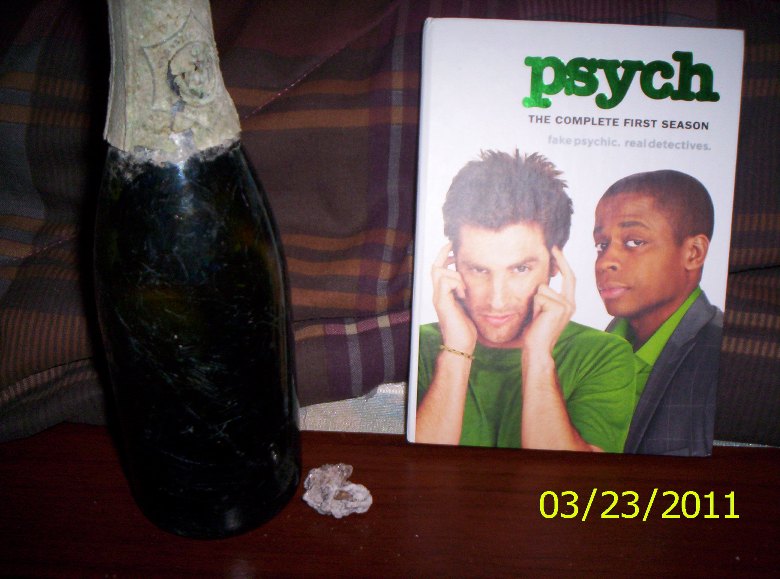


Sadly, no, topaz doesn't form from any of those things. It forms when a huge blob of magma cools and releases a bunch of hilarious gasses. Near the end of the cooling, the gasses are rich with our good friend fluorine, which meets up with silica and aluminum rich waters that are flowing around. The two meets, they get to talking, they date for 3 to 6 months, they get married, and then secretly resent each other for the rest of eternity.

Say you are the type of person who insists on "actual knowledge". Well, here's something for you. The actual chemical formula that explains why topaz shows up sometimes.

8KAlSi3O8 + 2F2 + 2H2O becomes 4[Al2 (F, OH)2 SiO4 (Topaz) +20 SiO2 (Quartz)+4K2O + O2

I don't know about you, but I think "actual knowledge" is boring. Let's just say that topaz forms due to dark elf magic. Also Andrew Johnson. He also formed due to dark elf magic.

And so ends topaz. If you want a piece of it and you live in the western U.S., you can always visit Topaz Mountain. It will take you 20 seconds to find a piece of it and another 20 seconds to get bored with it.

Finding Andrew Johnson may take longer.

Wednesday, March 9, 2011

Geologic Hazards of Utah!

Geology is not your friend.


There is perhaps no other "ology" out there that is trying so hard at any given moment to kill you. Even "murderology" isn't trying as hard. The problem is that geology has so many opportunities that the chances of escaping its murderous grasp seem slim. You can fall into it, you can fall onto it, you can fall off of it, heck, you can't fall anywhere without geology there trying to get a piece of the action.

Our tale today is one of caution. While it may seem impossible to escape geology's sinister clutches, the fact is that most of us will die from causes largely unrelated to geology or any geological process. Why is that? My friends, the answer is one of caution. In general, people are fairly cautious when it comes to geology.

The scene of our tragic tale is beautiful Kodachrome Basin in middlish Utah....somewhere.


The first thing you will notice when you step out into Kodachrome Basin is that you are surrounded by sandstone doing crazy things. Namely, forming large spires and peaks. Males may feel somewhat uncomfortable, but don't worry. Geology may be trying to kill you, but it's not competing with you for mates. The unusual spires....


are a bit of an oddity to geologists. Namely, they don't seem to know why they are there. For some reason certain sections of the sandstone are more resistant to weathering than the other sections and so they remained after all the nearby sandstone went the way of the dodo. Some folks believe that these sections used to be geysers, and the geyser water cemented the sandstone together, a-like so...


The rest of the people don't really care. How do I turn the date off on this camera? I hate this thing so much. Anyway, this post is about the dangers of geology, not about how much I hate my camera. Although it could be.

Geology, like most things, becomes dangerous once we let our guard down. It's like a cat, or an elderly relative. We grow used to having them around us, them BLAM! Someone's soiled a rug. And so it was with geology and three unfortunate fellows on a night just like tonight. Except back in 1954.

This is Bull Valley Gorge.


Bull Valley Gorge is a tight, winding slot canyon, one of many such affairs located in and around Kodachrome Basin. On the surface, it's no wider than 5 to 10 feet, but at a depth of nearly 200 feet it's a hazard waiting to become.....hazardous.

Three men were driving around the area in a new 1954 pickup truck without a care in the world. Some versions of the story say that they had been drinking fairly heavily, but I can't verify that. What we can be sure of is that they were having a grand old time. Unfortunately for them something else was out that night. Geology. Their truck sped along the dirt road until they came to the bridge that crossed Bull Valley Gorge. They crossed the bridge and started up the hill on the other side when something went wrong. For whatever reason, the truck stalled and began to roll backwards. Maybe it was bad gas, maybe it was faulty spark plugs, I don't know. But back the truck rolled.....right off the edge of the canyon.

Now, you may be thinking to yourself, "how is this geology's fault? It seems to me that it is guilty of nothing more than just existing". And you're right, it's not directly geology's fault. But that's what so insidious about geology. It always seems to be in just the right spot at just the right time to catch us unawares. And so it did to those three men. The truck plunged down a good 60 feet into the gorge before it became wedged in the narrowing walls. Two of the men fell out of the truck at this point and continued down to the floor of the canyon over a hundred feet away. The third gentleman remained in the truck. Sadly, all three of the men died, with the body of the fellow in the truck not being retrieved until the next spring. The truck was a different matter. Like some chubby kid trying to squeeze through a fence, the truck was stuck tight. And so, they left it.


And so it remained. Later, it became the base of a newer, better bridge that now crosses the gorge. All they did was shove a bunch of dirt and branches on top of the truck and BAM! New bridge.

And so we leave Kodachrome Basin with a message of caution. Geology can create incredible vistas, breath-taking canyons, and mediocre hills. But to the unwary, it is a childish imp, nipping at our heels. Wow, the Nite-Quil just kicked in. Look at that imp go! What a jerk.

Tuesday, February 22, 2011

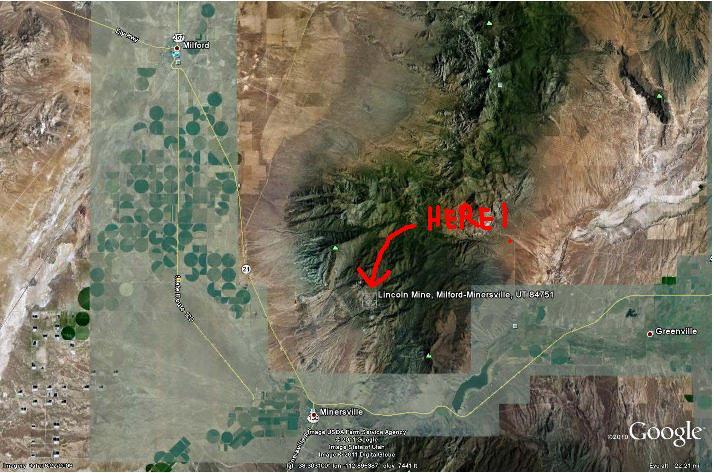
The Lincoln Mine - A Utah first. Kind of.

Welllll..what haven't we looked at? It's been a while since I last wrote about a mine, so maybe I'll do that. Frankly this first paragraph is just here for filler. Go ahead, look at all my past posts (do it!) and you'll see that I've never really said anything of use here. And by here I mean this blog.

Lets look at a mine stooped with history. Something that really enslaves the mind and pro-richens the heart. A mine that has all the rich, lustrous B-vitamins of history that you've come to expect from this blog and at the same time holds back the formation of the dandruff of ignorance! I read most of this paragraph off of a Head and Shoulders bottle. Ahhhh, Head and Shoulders, the perfect cure for writers block. But this post isn't about hair-care products! It's about this mine!


That sir, is the first mine in Utah. Well, kinda. If you pretend that the Spaniards didn't mine anything before the Mormons go here, THEN it's the first mine in Utah. So, in a much more factual way, it's in no way the first mine in Utah. But it is still largely recognized as the first mine in Utah, so let's go with that. We are going to need a little back story to truly appreciate the glory of this mine, so here we go.

Mormons first arrived in Beaver County in 1856 with the intention of doing what they do best; settling and growing stuff and attempting to escape the usual dangers of frontier life. One of the things that early Mormon settlers did not do was work in mines, or even look for mines really. Early church leaders found the prostitute-rich lifestyle of the miner to be somewhat at odds with the chastity-based viewpoint. Likewise, most miners tended to avoid Mormonism with particular vigor for the same reason. But gold heals all wounds, and the miners came anyway.


But the leader of the Mormon church (Brigham Young) recognized that building a settlement requires more than sheep and chastity. Iron and lead were needed! You can do a lot with iron and lead. Shovels, hammers, model trains, those wires that connect the little baskets to hot-air balloons, and so on. In realizing this, Brigham Young took a sharp departure from the whole no-mining thing and sent scouts out to the various corner of the state looking for coal, oil, iron and maybe just a little gold. Just to make chastity belts. Not really.

Of the metals mentioned above (iron and lead), lead was particularly important. You can use lead to make bullets, and with the arrival of the federal army in Utah in 1858 bullets became a hot commodity. The US Government was pretty sure that the Mormons were up to all sorts of mischief in their little paradise and had sent the army to do what it does best. Flapjacks! Also war. Mostly war.

Anyway, in the fall of 1858 Jessie N. Smith


Isaac Grundy


William Barton


(that's his house anyway) and Tarlton Lewis


discovered a rich load of lead-ore in the Mineral Mountains. Why, those are the very mountains we discussed a few weeks ago with the Bradshaw Mining District! Speaking of which, it is with a small amount of embarrassment that I admit that I may not have been *quite* right in my location of the Bradshaw District. It's actually a smidgen south of there. But hey, this is all free information, so if you don't like it, then go find someone else who is stupid enough to go into these things.

Please don't go. I'm so lonely.

Anyway, here we are....


Not good enough? How about this?


Anyway, these brave explorers returned a piece of the ore to Brigham Young in Salt Lake City, and taking one look at that sweet sweet galena (You should read that post again!), he told them to return to the prospect and construct a mine and a town to support it. And in which to practice chastity and such. And so, in 1858, the Lincoln Mine was born. This was roughly the same time that prospectors on their way to California discovered minerals in Gold Hill, but nobody really stopped to mine them until the 1869, so in theory the Lincoln Mine was the first mine in Utah. But what about the Spanish folks and their mines? Well, there is some evidence that the Spanish actually had a mine at the same location as the Lincoln Mine and worked it in the 18th century, so it may have actually been the first mine if you consider that. Interesting stuff. Well, to some. To others that was a very long and boring paragraph. I'm still undecided how I feel about it.

The first shipment of ore from the Spanish Mine (as the mine was originally called) occurred in 1860. The ore was transported to the Grundy-Barton Smelter which has been built on the Beaver River a few miles away. I would show you a picture of it, but it washed away in 1861 and no one ever bothered to take a picture of it. Anyway, it was rebuilt a couple of times.

In 1860, the mine was renamed the "Rollins Mine", after James H. Rollins, who became the bishop of Minersville that year. Minersville was (and still is) the name of the little community that was built to support this unusual Mormon mining endeavor. Here's Mr. Rollins...


They knew how to grow a mean beard back in the day. Anyway, pictures of old Minersville are few and far between. Here's two that are probably from somewhere around there.


Anyway, in a letter sent to Brigham Young in 1859, our friend Isaac Grundy says the following...

"We have prospected several leads and raised between six and eight thousand lbs. of lead ore. I think when the ore is in smelting order it will yield about sixty-eight percent lead. we intend now to put up a temporary furnace and send up to your city between 600 and 1,000 lbs between this time and Conference."

So hopes were high for this little hole in the ground.


The ore was smelted into bricks, at which point it was to be sent to Salt Lake to attend bullet school. I'm no bulletologist, but I'm betting that 1,000 lbs of lead would have made a fair sum of bullets. Or at least it would have if they hadn't run into a delightful little problem. Remember this guy?


That is galena. And, as I have stated before in a very important fashion, it not only contains lead, but also frequently contains silver. Lead is soft, and can be bullied into doing whatever we want it to. But silver isn't such a pansy. The problem with the ore from the Rollins Mine is that it contained significant amounts of silver, too much to be effectively worked into bullets. As a result, only a few bullets were made in order to address the pressing issue of werewolves.

Well, as we all know (very few of us know), the US army showed up but the war never really panned out. Utah agreed to stop marrying all the women it could find, and the government agreed to skip all the torching and burning and such. But now Rollins Mine was free to really start pumping out some silver, and that it did. In 1870, the Rollins Mine was renamed again in order to honor this guy....


It was probably somewhat of an effort to bury the hatchet with the Government in hopes that it might help Utah along with statehood. I don't know that for sure though, just something I made up. In 1871, the Lincoln Mining district was created, and whoooo doggie, it made some silver. Even during the Silver Depression of 1893 and the Overall General Depression of 1929, silver poured out of the area, with the Lincoln Mine proving to be a major producer up until 1935. This may not have happened at all if this guy....


(his name is Wells Spicer) hadn't leased the idle Lincoln mine in 1873 and struck a vein of ore that brought the mine back into the lime-light after the whole lead thing sort of puttered out. As an interesting note, Mr. Spicer wandered out into the desert in 1887 and was never heard from again. I guess that's not all that interesting.

In all, the average ore contained 13% lead and 6 oz. of silver per ton, as well as some gold and copper to boot. Abe Lincoln would have been proud. After 1935, the records of the mine grow a little more difficult to track down. Mining in general started to putter off around this time throughout the district. Minersville stuck around though. If you are ever bored and find yourself in the middle of Utah, stop on by. You can see some houses and lawns and stuff. Everyone likes houses and lawns.

So here is the Lincoln Mine today.


The main entrance is through this little incline surrounded by the wood remains of the head frame that once hauled the ore cars up the slope to the surface. Teenagers burnt most of it. Teenagers love burning things. It probably used to look something like this....


That thick red line is supposed to be a cable. I can only do so much in MS Paint. Look up on the hill! You can still see the old gasoline hoist from yesteryear! Neat! The only reason that thing is still there is because it weighs more than everything else in the universe combined.


The other tunnel you can see in that picture was a more of an exploration deal driven into the mountainside as folks looked for more silver and bullets and stuff. Again, there are signs that teenagers have been lurking about....


Next to burning things, teenagers love to write swears on things. Damn kids. Let's move through the swear door and into the musty unknown! Again, this is not the main Lincoln Mine, just some sort of other, sub-Lincoln mine. In we go!


Look! A door that says "Danger"!


I totally went through the door, but it was just an empty room. Maybe the danger was loneliness. In reality, it turns out that's where the miners used to store explosives. Explosives are dangerous to humans because we are soft, pungy creatures that fly apart when explosions happen around us, so if you ever find an explosive underground you probably aught to only kick it a little bit. Nah, don't touch it.

So who's ready to go down here?


Me neither. I guess people have gone down there and found the place to be flooded in areas. I was content to just look down at it from the top. That incline goes down for 400 feet before it connects to a 200 foot tunnel. After that, the tunnel splatters all over the place for a grand total of 2,500 feet of pure mine goodness. But it also is full of watery crappyness, so that sort of takes the steam out of it. But look at my reward for choosing safety!


A horny toad! I must have chased this little bugger around for a solid hour. Ahhh, but it was all in good fun. For me.

Also located near the mine was this mine-like object.


I don't know what this was supposed to be. That tunnel is easily 10 feet in diameter, but only goes in for a few hundred yards. See?


Perhaps some particularly tall miner was looking for silver, but got tired and just gave up. I can sympathize. Birds have taken over this little hole in the ground now and have built little nests all over the walls.


Also, they poop a lot, so while bird poop isn't as bad as having a mine collapse on you, it's still pretty bad.

As for rockhounding potential, the Lincoln Mine isn't too great. I found some of our galena friend on the dump as well as a few pieces of another mineral named hemimorphite. It's pretty neat.

And so, with that ends the story of the Lincoln Mine for now. Maybe one day the mine will spring back to life, much like zombie Lincoln.